

Introduction
Read our annual report to learn how we continued to improve Queensland’s CTP insurance scheme in the 2025-26 financial year.
See how we’ve met the annual report requirements for Queensland Government agencies and statutory bodies.
Accessibility and copyright
Print: ISSN:1837-1450
Online: ISSN: 1837-1469
The Motor Accident Insurance Commission is committed to providing accessible information and services to Queenslanders from all cultural and linguistic backgrounds. To talk to someone about this annual report in your preferred language call 1800 CTP QLD (1800 287 753).
Motor Accident Insurance Commission
GPO Box 2203, Brisbane QLD 4001
Phone: 1800 CTP QLD (1800 287 753)
Email: maic@maic.qld.gov.au
Web: https://maic.qld.gov.au/
Nominal Defendant
GPO Box 2203, Brisbane QLD 4001
Phone: 07 3035 6321
Email: nd@maic.qld.gov.au
Web: https://maic.qld.gov.au/about-us/maic-and-nd/#nominal-defendant
Visit https://maic.qld.gov.au/ to view this annual report. Copies of the report are also available in paper format. To request a copy, please contact us using the details above.
© Motor Accident Insurance Commission 2026
Licence: This annual report is licensed by the State of Queensland under a Creative Commons (CC BY) 4.0 International licence.
CC BY Licence Summary Statement: In essence, you are free to copy, communicate and adapt this annual report, as long as you attribute the work to the Motor Accident Insurance Commission. To view a copy of this licence, visit: https://creativecommons.org/licenses/by/4.0/.
Attribution: Content from this annual report should be attributed as: The Motor Accident Insurance Commission annual report 2025–26.
Letter of compliance and certification of financial statements
3 September 2026
The Honourable Ros Bates MP
Minister for Finance, Trade, Employment and Training
GPO Box 15483
CITY EAST QLD 4002
Dear Minister
I am pleased to submit for presentation to the Parliament the Annual Report 2025–26 and financial statements for the Motor Accident Insurance Commission and the Nominal Defendant.
I certify that this Annual Report complies with:
- the prescribed requirements of the Financial Accountability Act 2009, the Financial and Performance Management Standard 2019, the Motor Accident Insurance Act 1994, the National Injury Insurance Scheme (Queensland) Act 2016 and
- the detailed requirements set out in the Annual report requirements for Queensland Government agencies.
A checklist outlining the annual reporting requirements is provided at page 93 of this annual report.
Yours sincerely,
Gaenor Walker
Acting Insurance Commissioner
About us
Queensland Compulsory Third Party insurance scheme
Queensland’s Compulsory Third Party (CTP) insurance scheme is governed by the Motor Accident Insurance Act 1994 (MAI Act).
The scheme protects motor vehicle owners, drivers and passengers from being held financially responsible if they injure someone in a motor vehicle crash. It also enables people who are injured to claim fair and timely compensation for their injuries and access prompt and reasonable medical treatment and rehabilitation.
Motor vehicle owners pay their CTP insurance premium when they pay their vehicle registration through the Department of Transport and Main Roads (DTMR). DTMR remits the applicable premium to the licensed CTP insurer nominated by the motor vehicle owner. This minimises administration costs, is convenient for motorists and reduces the incidence of uninsured vehicles.
Motor Accident Insurance Commission
The Motor Accident Insurance Commission (MAIC or Commission) is the regulatory authority responsible for ongoing management of Queensland’s CTP insurance scheme.
MAIC’s functions include:
- licensing and supervising CTP insurers and monitoring their compliance
- regulating the CTP insurance scheme
- establishing and revising standards about the proper management of claims
- keeping the statutory insurance scheme under review and making recommendations for its amendment
- developing and maintaining a claims register and statistical database for the purpose of providing management information
- fixing the range within which each insurer must file their premium
- monitoring the availability, adequacy and use of rehabilitation services for people injured in crashes
- recommending to government the levies and administration fees payable to cover the costs involved in delivering different components of the CTP insurance scheme
- contributing funds towards research and education to reduce the frequency and severity of motor vehicle crashes and to facilitate rehabilitation of people who are injured in crashes
- maintaining a helpline service from which the public may obtain information on the CTP insurance scheme.
Nominal Defendant
The Nominal Defendant (ND) is a statutory body which acts as a licensed insurer in the CTP insurance scheme for claims that involve motor vehicles that are unidentified or uninsured. It also meets the claims costs associated with licensed insurers that become insolvent.
National Injury Insurance Agency, Queensland
Queensland’s CTP insurance scheme is complemented by the National Injury Insurance Scheme, Queensland (NIISQ), which was established on 1 July 2016. NIISQ provides necessary and reasonable lifetime treatment, care and support to people who sustain eligible serious personal injuries in motor vehicle crashes on Queensland roads, regardless of who was at fault. MAIC also has a legislative function pursuant to Chapter 5 of the National Injury Insurance Scheme (Queensland) Act 2016 (NIISQ Act) to monitor the efficiency and effectiveness of the National Injury Insurance Agency, Queensland (NIISQ Agency), which administers NIISQ.
The MAIC Insurance Commissioner is also the Chief Executive Officer responsible for managing the NIISQ Agency. In line with statutory requirements of the NIISQ Act, the NIISQ Agency is required to produce its own annual report, which can be viewed at https://niis.qld.gov.au/news-and-research/annual-reports.
Our location
MAIC has been located in Brisbane since it commenced operations on 1 September 1994 as a statutory body and is located at 275 George Street. MAIC and the Nominal Defendant are positioned within the Finance and Investment division of Queensland Treasury.
Our purpose
We boldly lead our scheme to support injured claimants and motorists, while ensuring strong and efficient governance.
Our vision
By 2026, claimants and motorists will benefit from improved experiences and outcomes through our leadership of an aligned, intelligent and empowering scheme.
Our objectives
We strive to deliver our objectives:
- improved experience for claimants, motorists and stakeholders
- smart and responsive regulatory functions
- a highly engaged team that strives for excellence.
Our contribution to government objectives for the community
We also actively support the Queensland Government’s objective for the community of fostering ‘Safety where you live’ by focusing on trauma mitigation, early intervention and strong rehabilitation support, helping injured claimants and motorists recover from accidents.
Our opportunities
We embrace the opportunity to:
- develop a future-ready workforce that consistently delivers high-quality services to claimants
- unite with stakeholders to collaborate and co-design better claimant outcomes and reduced incidences and effects of road trauma
- leverage emerging digital technologies to educate stakeholders, influence decision-making and improve outcomes for the scheme
- influence and invest in key health initiatives to improve outcomes.
Our key risks
We mitigate risks such as:
- inability to respond appropriately to economic pressures and third-party risks
- legislation fails to respond to unethical practices
- inability to provide a flexible, future-ready work environment to protect the wellbeing of our workforce and ensure excellence in service delivery
- inability to have a scheme structure that can respond to significant market pressures.
Our success measures
Our success is indicated by:
- stakeholder feedback and claimant satisfaction
- scheme efficacy measures and process digitisation
- Commission compliance and reputation measures
- team diversity and engagement measures.
Insurance Commissioner's report
As I reflect on 2025–26, I keep coming back to the idea that strong schemes are built over time. They rely on clear purpose, careful stewardship and a shared commitment to doing the core work well, every day, for Queenslanders. This year marked an important transition for the Motor Accident Insurance Commission (MAIC) and the Nominal Defendant, as we farewelled Neil Singleton as Insurance Commissioner. Neil’s leadership over many years helped strengthen the foundations of Queensland’s Compulsory Third Party (CTP) insurance scheme.
He brought a steady focus to affordability, fairness and the needs of people injured on our roads. His contribution has left a lasting legacy, and I sincerely thank him for his dedication to the scheme, the community and the many people who have worked alongside him.
Queenslanders continue to benefit from one of the most affordable CTP insurance schemes in Australia. The scheme provides strong, affordable protection for vehicle owners while ensuring people injured in motor vehicle accidents can access compensation, treatment, rehabilitation and care to support their recovery and long-term outcomes.
That performance does not happen by accident. It reflects effective regulation, constructive engagement with licensed insurers and a shared commitment to continuous improvement. It also reflects the ongoing work of people across MAIC, the Nominal Defendant and our partner organisations.
A key milestone during the year was the finalisation of the 2023 scheme review. Following further consultation and analysis, the review was finalised in early 2026, with the Queensland Government determining that broader reforms would not be progressed at this time. The return of competitive premiums across multiple vehicle classes for the first time in more than a decade is a clear sign of a healthy, sustainable scheme working well for Queensland motorists.
Throughout the year, we remained focused on our strategic priorities: improving experiences for claimants, motorists and stakeholders; delivering smart and responsive regulatory functions; and building a highly engaged and capable workforce. These priorities are practical ones. They are about making sure the scheme continues to meet the needs of Queenslanders now, while also preparing for the future.
Across our work, we continued to strengthen partnerships, embrace innovation and seek opportunities to improve how we deliver services and regulatory oversight.
Financial sustainability remains fundamental to the long-term success of Queensland’s CTP insurance scheme. During 2025–26, MAIC continued to balance affordability for motorists with funding for future claims through careful stewardship, evidence-based decision-making, strong financial management and effective regulatory oversight. This helps ensure the scheme remains resilient and sustainable.
Looking ahead, our focus remains on evolving community expectations, advances in technology, changing patterns of mobility and increasing data capability. We will continue to leverage data, digital solutions and evidence-based approaches to strengthen regulatory oversight, enhance stakeholder experiences and support informed decision-making. Importantly, we will continue listening to claimants, motorists, insurers, healthcare providers and our partners to ensure Queensland’s CTP scheme remains responsive, contemporary and focused on what matters most to the people it serves.
As always, none of this work happens in isolation. Strong schemes are sustained by the collective efforts of many people over many years. I would like to sincerely thank our team, licensed insurers, healthcare and legal professionals, researchers, stakeholder partners and the many others who contribute their expertise, care and commitment to Queensland’s CTP scheme every day. Your efforts help ensure injured people receive the support they need, while maintaining a scheme that remains affordable and sustainable for Queensland motorists. I also thank Queensland motorists for their ongoing contribution to the scheme. Together, we are helping build a system that responds when accidents occur and contributes to safer roads, stronger communities and better outcomes for the future.
Gaenor Walker
Acting Insurance Commissioner
Performance
Our 2025–26 performance is assessed against the objectives outlined in our Strategic plan 2022–2026 (refer to Appendix 1, page 83).
These objectives include:
- improved experience for claimants, motorists and other stakeholders
- smart and responsive regulatory functions
- a highly engaged team that strives for excellence.
Key initiatives
MAIC and the Nominal Defendant delivered their strategic objectives through a number of key initiatives. This is summarised in the report card on page 9.
Future focus 2026–27
In 2026–27, our purpose remains clear: to ensure the ongoing operation, affordability and effectiveness of the CTP scheme for Queensland motorists and individuals affected by road trauma. MAIC and the Nominal Defendant will achieve this by:
- delivering smart, adaptive and modern regulation
- ensuring scheme affordability and financial sustainability
- improving claimant experience and outcomes
- preparing the scheme for future risks and innovation
- utilising modern technology to enhance the efficiency and effectiveness of claims management processes, including streamlining operational workflows to deliver improved claims management outcomes
- leveraging predictive data analytics and insights to inform decision-making and inform operational claims decisions to optimise outcomes
- leveraging trusted internal and external relationships to enhance claims management by exchanging knowledge, building partnerships, and integrating innovative approaches that strengthen the Nominal Defendant team’s capabilities and outcomes
- investing in workforce capability development through a workforce futures program, focusing on emerging skills and leadership development
- fostering a culture of collaboration, innovation and accountability to drive organisational success
- prioritising talent acquisition and retention by implementing forward-thinking strategies
- leveraging advanced technologies and ways of working to deliver more impactful outcomes
- fostering a culture of innovation and learning to respond to the dynamic external environment
- leveraging data analytics to improve decision-making
- implementing contemporary governance practices to enhance adaptability and resilience
- regularly reviewing and refining operational processes to ensure alignment with strategic goals and transparent business performance.
Report card
| Highlights | Performance indicators | Target | Outcome |
|---|---|---|---|
| Objective | 1. Improved experience for claimants, motorists and stakeholders | ||
| Develop faster, simpler systems and processes, enhancing efficiency through digitisation and self-service options |
| On track | On track |
| Support research focused on reducing the incidence and effects of road trauma |
| Achieved On track | Achieved On track |
| Collaborate with and leverage strategic partnerships to deliver better outcomes |
| Achieved Achieved | Achieved Achieved |
| Co-design initiatives that embed representative voices of claimants and motorists |
| Achieved Achieved | Achieved Achieved |
| Best practice Nominal Defendant claims management |
| On track | On track |
| Objective | 2. Smart and responsive regulatory functions | ||
| Sustain confidence through prudent financial management |
| Achieved On track | Achieved On track |
| Leverage technology to drive scheme efficiencies and engagement |
| Achieved | Achieved |
| Embrace the power of data analytics to inform decision-making |
| Achieved | Achieved |
| Effective systems, regulatory tools, techniques and practices |
| Achieved | Achieved |
| Objective | 3. A highly engaged team that strives for excellence | ||
| Empower a safe, capable and engaged team |
| Achieved Achieved | Achieved Achieved |
| Cultivate a bold, curious and focused culture, championing our people as they deliver outstanding services |
| Achieved Achieved Achieved | Achieved Achieved Achieved |
| Continuously collaborate and grow innovative functionality to improve ways of working |
| Achieved | On track |
Levies and administration fee
Queensland’s CTP insurance premium contains levies and an administration fee to help cover the costs involved in delivering different components of the CTP insurance scheme.
These levies and the administration fee are calculated annually and include:
- the statutory insurance scheme levy
- the Nominal Defendant levy
- the hospital and emergency services levy
- the National Injury Insurance Scheme, Queensland levy
- an administration fee.
In setting these levies, advice is sought from the receiving agencies and the State Actuary’s Office. Actuarial analysis is used to ensure that appropriate levies are collected to provide ongoing services to people injured on Queensland’s roads.
Statutory insurance scheme levy
The statutory insurance scheme levy covers the estimated operating costs of MAIC in administering the MAI Act and fulfilling the range of legislative functions required. It also provides funding for research into crash prevention and injury mitigation. From 1 July 2025, the levy increased by $2.00 to $4.00 per policy and collected $21.0 million across 2025–26.
Nominal Defendant levy
The Nominal Defendant levy varies by vehicle class and covers the estimated costs of the Nominal Defendant in managing and funding claims arising from motor vehicle accidents involving uninsured (unregistered) or unidentified vehicles. The levy is determined based on an actuarial assessment of claim trends. From 1 July 2025, the levy for Class 1 vehicles decreased to $2.00 with $10.2 million collected in 2025–26.
Hospital and emergency services levy
The hospital and emergency services levy covers a reasonable proportion of the estimated cost of providing public hospital and public emergency services to people who are injured in motor vehicle crashes, who use such services and who are claimants or potential claimants under the CTP insurance scheme. The levy amount calculated varies by vehicle class.
From 1 July 2025, the hospital and emergency services levy increased by $2.55 to $11.75 for a Class 1 vehicle. The collected income from the levy for the financial year was $59.6 million, of which $51.8 million was apportioned to Queensland Health (QH), $3 million to Queensland Fire Department (QFD) and $4.8 million was allocated to Queensland Police Service (QPS).
Collecting the levy in this way removes the need for hospitals and emergency services to issue invoices to CTP insurers for each treatment provided to victims of road crashes. This saves a significant administrative burden for service providers and licensed CTP insurers, providing an efficient means of funding agencies which provide critical services to people injured or killed in motor vehicle accidents.
National Injury Insurance Scheme, Queensland levy
The National Injury Insurance Scheme, Queensland levy (NIISQ levy) varies by vehicle class and covers the estimated costs of the NIISQ which provides necessary and reasonable lifetime treatment, care and support to people who sustain eligible serious personal injuries in motor vehicle crashes in Queensland.
The NIISQ levy increased by $7.60 to $131.40 for a Class 1 vehicle in 2025–26 and collected $712.2 million.
Administration fee
The administration fee is the fee payable to DTMR for delivering administrative support to the CTP insurance scheme, such as providing CTP-related customer service and processing CTP premiums as part of the motor vehicle registration process.
The administration fee increased by 5 cents to $8.65 per policy in 2025–26 and collected $45.5 million.
Premium levy and fee collection
1 July 2025 to 30 June 2026
| Description* | $ (‘000) |
| Total insurance premiums collected** | 2,221,100 |
| Nominal Defendant levy | 10,151 |
| Statutory insurance scheme levy | 21,028 |
| Hospital and emergency services levy^ | 59,549 |
| Administration fee (DTMR fee) | 45,510 |
| NIISQ levy+ | 712,184 |
| Insurer’s premiums# | 1,372,678 |
Notes: * Levies received for the period 1 July 2025 to 30 June 2026 are on a cash basis.
** Net of cancellations.
^ From 1 July 2016, emergency levies collected were remitted separately to relevant entities. In the past the emergency levies were remitted as one payment.
+ National Injury Insurance Scheme, Queensland levy.
# Includes GST.
Achievements
Improving access to CTP information through a refreshed MAIC website
In July 2026, we published an updated MAIC website with a refreshed design, simpler content and clearer navigation. The changes make it easier for vehicle owners, injured people, health providers and other stakeholders to find practical information about CTP insurance, the claims process, rehabilitation, research and scheme governance.
The new structure brings together information that was previously spread across different sections, including what CTP covers, what to do after an accident, how to make and manage a claim, and how claimants can access insurer-funded rehabilitation and treatment. We also introduced a central resources hub and a dedicated research section to better showcase MAIC-funded work that supports road safety and recovery outcomes.
The updated website supports our broader commitment to making Queensland’s CTP scheme easier to understand and navigate. Existing links and bookmarks have largely been maintained through redirects, helping minimise disruption for regular users while improving access to clearer, more user-focused information.
Finalising Queensland’s CTP scheme review
During 2025–26, the Queensland Government finalised its review of Queensland’s CTP insurance scheme following consideration of stakeholder submissions, additional consultation and further analysis. The review examined opportunities to improve affordability, sustainability and competition within the scheme while maintaining support for people injured on Queensland roads.
The review concluded that reform would not be progressed at this time, recognising that Queensland’s CTP scheme continues to perform well and remains one of the most affordable in mainland Australia. MAIC will continue to engage with stakeholders and monitor scheme affordability, competitiveness and performance to ensure the scheme continues to deliver for Queensland motorists and injured road users.
Price competition returns to Queensland’s CTP scheme
This year, Queensland motorists also benefited from the return of price competition within the CTP insurance market for the first time since 2017. Licensed insurers began offering different CTP premium prices, providing motorists with greater choice and creating downward pressure on registration costs.
The return of competitive premiums reflects the strength and stability of Queensland’s privately underwritten CTP scheme. It supports MAIC’s objective of maintaining an affordable, fair and sustainable scheme while delivering value for motorists and ensuring genuinely injured people continue to receive access to treatment, rehabilitation and compensation.
Launching MAIC Exchange to improve insurer reporting
In 2025–26, MAIC continued progressing pilots on the Queensland CTP Portal and MAIC Exchange platforms, working with insurers and lawyers to ensure feedback was addressed. MAIC Exchange is a secure reporting platform designed to help insurers exchange information and documents with MAIC in line with regulatory requirements.
This work supports MAIC’s broader focus on claimant experience, scheme communications and emerging strategic priorities. It also lays the foundation for more secure and efficient digital services across the CTP scheme, while reducing administrative burden for insurers and legal stakeholders.
Strengthening support for unrepresented claimants
In June 2026, MAIC launched a new Claims Management Standard to strengthen protections for people navigating Queensland’s CTP claims process without legal representation. The standard aims to improve transparency and communication by setting clear requirements for licensed insurers, including timely responses, accessible claims officer contact details, reminders about the option to seek legal advice and clearer explanations of settlement offers.
The standard is supported by a dedicated information sheet to help unrepresented claimants understand their responsibilities and what to expect throughout the claims journey.
Together, these resources reinforce MAIC’s commitment to safeguarding claimants, supporting informed decision-making and ensuring insurers meet their obligations under Queensland’s CTP insurance scheme.
Managing Nominal Defendant claims prudently
The Nominal Defendant continues to provide an important safety net for people injured by unidentified or uninsured vehicles in Queensland. Its work requires careful and prudent claims management, particularly where the involvement of an unidentified vehicle is alleged and the facts of a claim require close scrutiny.
Monitoring the NIISQ
In line with the NIISQ Act, we continue to monitor the efficiency and effectiveness of the NIISQ Agency, which administers the NIISQ. The NIISQ Agency assesses, decides and funds necessary and reasonable lifetime treatment, care and support for people who sustain an eligible serious personal injury in a motor vehicle crash in Queensland on or after 1 July 2016.
This monitoring role helps maintain confidence that the scheme is operating as intended and delivering long-term support for seriously injured people.
Further information about NIISQ and the NIISQ Agency’s operations is available in the NIISQ Agency annual report at https://niis.qld.gov.au/.
Prevention of road crashes
In fulfilling its legislative functions, MAIC funds a range of ongoing and one-off initiatives designed to support the continued viability and affordability of the Queensland CTP scheme. This investment focuses on preventing road crashes and minimising the impacts of road trauma by making improvements in the treatment, care and rehabilitation of those injured.
During this financial year, we have continued our support to a range of healthcare, rehabilitation and trauma initiatives to support outcomes for Queenslanders injured on our roads.
Governance
Our people
We strive to create a positive workplace environment where our people are engaged, committed and highly capable. In 2025–26, MAIC continued to embed flexible work practices that support business needs, while supporting staff to create a healthy balance between work and personal commitments.
Our leaders are role models and active supporters of inclusion and diversity in the workplace, regularly acknowledging external awareness events and days of significance, such as NAIDOC Week, Multicultural Queensland month and Disability Action week.
MAIC staff have access to a range of diversity and inclusion employee networks coordinated by Queensland Treasury. They are also provided with the opportunity to immerse themselves in team showcases, cultural training, Innovation Day activities and other work programs.
The health and wellbeing of our team is essential and during 2025–26 we continued to encourage staff to maintain an appropriate work-life balance. We supported our employees through trauma-informed practice training and focused on building capability through training in positive performance management, good management practice and recruitment and selection. Staff engagement remained strong in 2025–26, with an 86% engagement score in the Working for Queensland survey, with results surpassing the public sector average in all areas bar one.
We met our obligations under the Public Sector Ethics Act 1994 by ensuring our staff completed Queensland Treasury’s suite of mandatory online training modules, including code of conduct, right to information, information privacy and fraud and corruption. We also strive to further the objectives of the Human Rights Act 2019 through annual online training for all employees and leveraging Queensland Treasury’s human rights complaints management framework and human rights network.
Nil formal disputes arose during the 2025–26 period.
Nil formal employee grievances were lodged during the 2025–26 period.
Our employee expenses and key executive management personnel and remuneration information can be found in the Financial Information (pages 30 and 40 for MAIC, and pages 59 and 77 for the Nominal Defendant). To see MAIC’s workforce profile, including full-time equivalent (FTE) staff and permanent separation rate, view Queensland Treasury’s annual report.
Our values
We align our behaviour and operations with the five Queensland public service values:
- Customers first
- Ideas into action
- Unleash potential
- Be courageous
- Empower people
Human rights
As part of our commitment to furthering the objectives of Queensland’s Human Rights Act 2019, we:
- completed Human Rights Certificates for the Motor Accident Insurance (Administration Fee and Levies) and Other Legislation Amendment Regulation 2026 and Motor Accident Insurance Indexation Notice 2026
- ensured all new staff learnt about their human rights obligations via our employee induction and orientation programs
- embedded a commitment to human rights into our strategic and operational plans
- continued our focus on employee health, safety, wellbeing and human rights by supporting flexible work arrangements for employees.
No human rights complaints were received during the 2025–26 reporting period.
Our leadership team
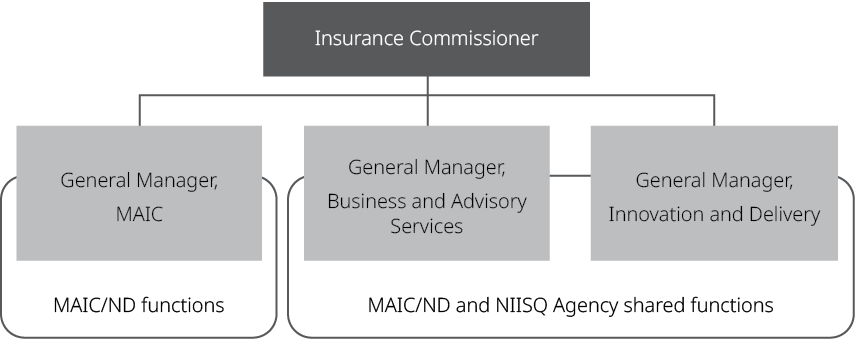
The Insurance Commissioner sets the direction for MAIC, the Nominal Defendant and the NIISQ Agency and reports to the State Parliament through the Treasurer, Minister for Energy and Minister for Home Ownership, as well as the Minister for Finance, Trade, Employment and Training.
They are supported by the leadership team, which includes General Manager, MAIC; General Manager, Business and Advisory Services; and General Manager, Innovation and Delivery.
Our leadership team is responsible for implementing the strategic direction of MAIC, the Nominal Defendant, and the NIISQ Agency, and overseeing operational performance, determining operational policy and project management.
The leadership team supports the Insurance Commissioner, as the accountable officer, to meet legislative requirements and accountabilities as well as to identify and manage key areas of risk. As at 30 June 2026, the leadership team comprised of:
Gaenor Walker
Acting Insurance Commissioner
B. OccTher, Grad Cert (Management)
Gaenor Walker brings extensive experience from her time working in the insurance sector, non-government organisations and in private practice.
With a passion for service design and transformation, Gaenor is proud to be leading the MAIC, Nominal Defendant and NIISQ teams. Her responsibilities include providing strong strategic leadership to ensure a sustainable and equitable CTP insurance scheme in Queensland that delivers outcomes for injured people.
Gaenor also holds the role of Acting Chief Executive Officer with the NIISQ Agency.
David Vincent
General Manager, Motor Accident Insurance Commission
David has over 30 years’ insurance experience including roles in personal injury claims management and underwriting, along with positions involving insurance regulation and government policy development. David is responsible for leading the strategic management of the Nominal Defendant claims unit. He also manages MAIC’s regulatory functions, including the supervision of licensed insurers and claim farming investigations and prosecutions.
Robert McLean
General Manager, Business and Advisory Services
Acting Deputy Insurance Commissioner
BCom/LLB (Hons), Grad Dip ICAA, Dip Fin Planning
In his role, Robert leads a diverse range of corporate operational teams, encompassing finance, corporate governance, people and culture, procurement, business services and communications. A qualified accountant and member of Chartered Accountants Australia and New Zealand (CA ANZ), Robert brings over two decades of experience to his role. His career, which began in public practice, has spanned the Queensland workers’ compensation and non-profit sectors, equipping him with an extensive understanding of the unique challenges these industries face every day.
Robert is deeply passionate about fostering a proactive team environment that supports the business through the delivery of high-quality services.
Peter How
General Manager, Innovation and Delivery
Dip (Proj Mgt), B. Comm, Grad Dip (Commercial Computing), MBA, GAICD
Peter has comprehensive executive leadership experience in government and private enterprise across a range of industries with a particular focus on innovation and incubation, organisational performance, agility and growth. He is also a qualified company director and board advisor.
Organisational Structure
Risk management
In accordance with the Financial Accountability Act 2009, the Under Treasurer has the responsibility to establish and maintain an appropriate system of internal control and risk management.
We are committed to effective risk management and have adopted Queensland Treasury’s risk management framework, which includes a risk management policy and a risk management guide. The framework aligns with the principles contained in the Australian Standard AS/NZS ISO 31000:2018 Risk management – guidelines, Commonwealth Risk Management Policy 2023 and other relevant standards.
MAIC and the Nominal Defendant’s risk register is maintained and reviewed by the leadership team biannually. Risks are monitored with risk controls and treatment strategies assigned to risks where appropriate. Our risk management approach ensures:
- we meet our statutory responsibilities under the MAI Act, the NIISQ Act and other legislation
- risk management is integrated into organisational activity
- corporate governance processes, including systems of internal control, are assessed and enhanced regularly.
Audit and Risk Management Committee
The Audit and Risk Management Committee (ARMC) support Treasury’s accountable officer – the Under Treasurer – to meet the responsibilities under the Financial Accountability Act 2009, the Financial and Performance Management Standard 2019 and other prescribed requirements.
The role of ARMC is to provide independent assurance and advice to the Under Treasurer on the appropriateness of Treasury’s financial reporting, risk management, internal controls and external accountability responsibilities as prescribed in the relevant legislation and standards.
The ARMC also provides oversight for select Treasury-related entities that sit within Treasury’s broader portfolio (but prepare independent financial statements) which in 2025–26 included MAIC and the Nominal Defendant.
2025–26 Audit and Risk Management Committee
Chair:
- Karen Prentis (independent member)
Members:
- Domenico Licastro – term ended during the year
- Georgina Crundell – resigned during the year
- Mike Reid
- Nina Du Thaler.
During the reporting period, several changes occurred regarding the composition and membership of the Committee. Specifically, two independent members tendered their resignations, and two new independent members were appointed. This composition is consistent with the requirements for a fully independent Committee, as outlined in the Queensland Treasury Audit Committee Guidelines Improving Accountability and Performance October 2023.
The Under Treasurer, Deputy Under Treasurer, Corporate and Executive Services, Chief Finance Officer (CFO), Chief Risk Officer, Queensland Audit Office (QAO), Internal Audit providers and Head of Internal Audit and a representative from the Queensland Revenue Office (QRO) have standing invitations as observers to attend all ARMC meetings. Treasury officers are invited to attend meetings as required.
The five independent committee members received a combined total remuneration of $56,000 (excluding GST) for their role on the committee during 2025–26.
Key achievements for 2025–26
In 2025–26, the Committee met five times and fulfilled its responsibilities in accordance with its charter and approved work plan.
Key achievements included:
- endorsing the 2024–25 Financial Statements for Queensland Treasury, MAIC and the Nominal Defendant
- endorsing the three-year strategic Internal Audit Plans and monitoring 2025–26 internal audit activity
- reviewing the effectiveness of the department’s risk management framework and overseeing the management of material project risks
- monitoring progress of the implementation status of internal audit recommendations
- considering issues raised by QAO, including the status of recommendations implementation from performance audits and Treasury-related reports to Parliament
- considering the ongoing performance management, information security, governance and risk management activities of the department (including MAIC and the Nominal Defendant).
Internal and external accountability
Our governance framework includes both internal and external accountability measures. During 2025–26, MAIC and the Nominal Defendant’s internal audit services were provided by an outsourced provider, appointed and managed by Queensland Treasury.
Internal audit is an integral part of the corporate governance framework by which Queensland Treasury ensures that internal controls are in place to mitigate risks, and that governance processes meet organisational goals effectively. Internal audit is designed to add value and improve operations by providing independent and objective assurance to the Under Treasurer that the financial and operational controls are efficient, effective and economical.
Externally, MAIC and the Nominal Defendant are audited by QAO in accordance with the Financial Accountability Act 2009. MAIC and the Nominal Defendant have achieved unqualified audits since the Commission commenced operations in 1994.
Information systems and records management
MAIC and the Nominal Defendant collect and store personal information to administer Queensland’s CTP insurance scheme under the MAI Act.
Our corporate infrastructure is within scope for both MAIC and the Nominal Defendant. Our records management framework aims to ensure our record management practices are consistent with other offices within the Queensland Treasury portfolio and are compliant with the MAI Act, Public Records Act 2023, Information Privacy Act 2009 and best practice record keeping standards. Records are securely stored within MAIC and the Nominal Defendant’s controlled information systems, with appropriate safeguards to protect confidentiality, integrity and accessibility in line with legislative and policy requirements.
Information security attestation
MAIC and the Nominal Defendant are included in Queensland Treasury’s annual Information Security Return. As such, during the mandatory annual Information Security reporting process, the Under Treasurer attested to the appropriateness of the information security risk management within Queensland Treasury to the Queensland Government General Manager Cyber Security, noting that appropriate assurance activities have been undertaken to inform this opinion and Treasury’s information security risk position.
Statistics
We produce quarterly and annual CTP scheme insights reports to demonstrate key aspects of scheme performance. These reports inform our stakeholders and the broader community about the operation of the scheme and management of claims, as well as enhancing scheme awareness and understanding. These publications, including Annual CTP scheme insights: 2025–26, are available at https://maic.qld.gov.au/about-us/publications/ctp-scheme-insights.
We support the Queensland Government Open Data Initiative. In 2025–26, we released 15 datasets in addition to CTP insurance scheme insights reports. Our Open Data sets are available at https://www.data.qld.gov.au/dataset/compulsory-third-party-ctp-statistics.
Motor Accident Insurance Commission
Summary of financial performance 2025–26
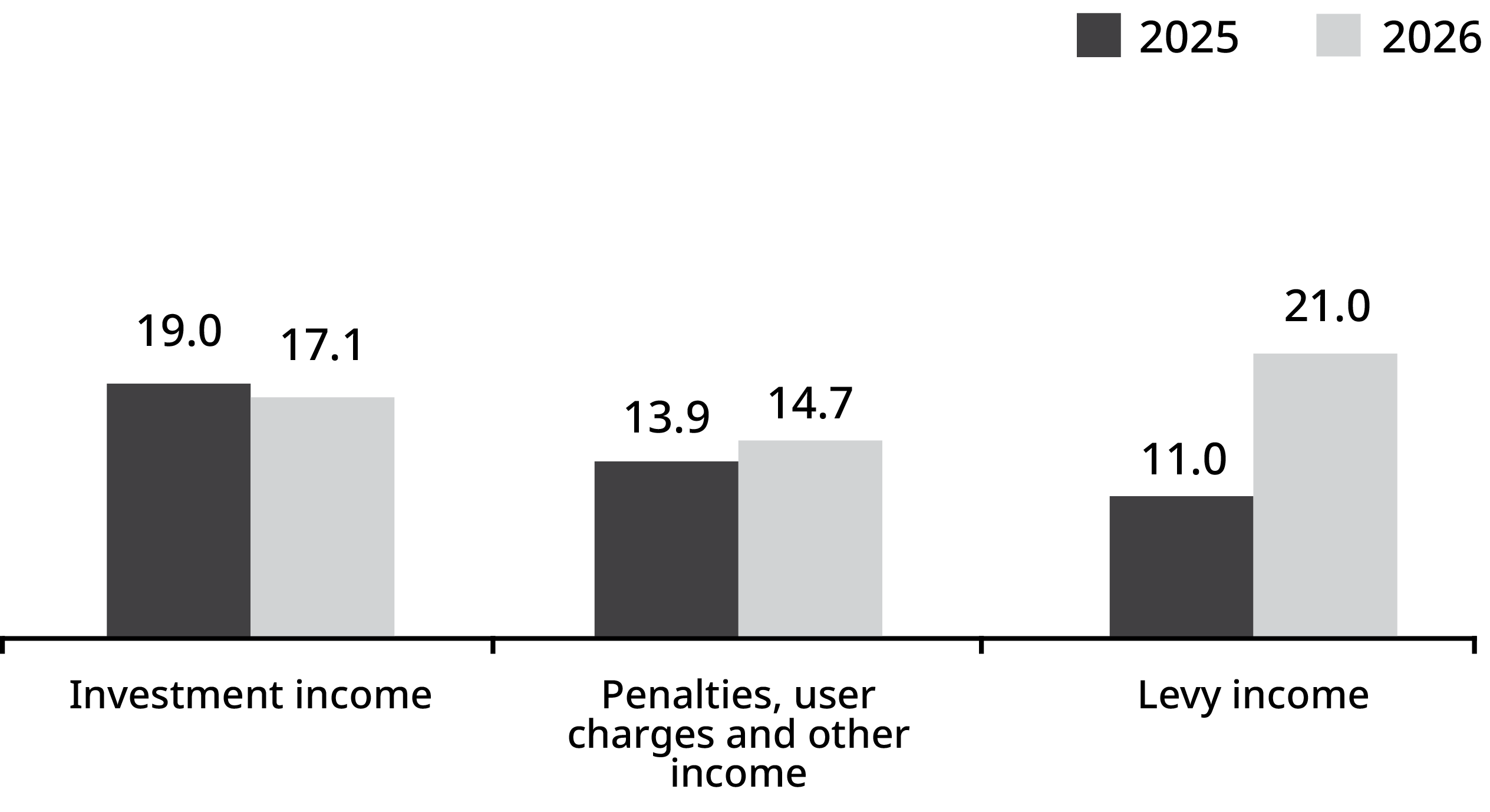
MAIC reported an operating surplus of $5.5 million for 2025–26, up from $3.1 million in 2024–25, driven by higher levy and penalty income, partly offset by higher expenses and lower investment returns.
The statutory insurance scheme levy increased to $4.00 per vehicle ($2.00/vehicle 2024-25), while penalties, user charges and other income rose by $0.8 million to $14.7 million.
Investment gains were $17.1 million, down from $19.0 million in 2024-25, reflecting lower equity market returns.
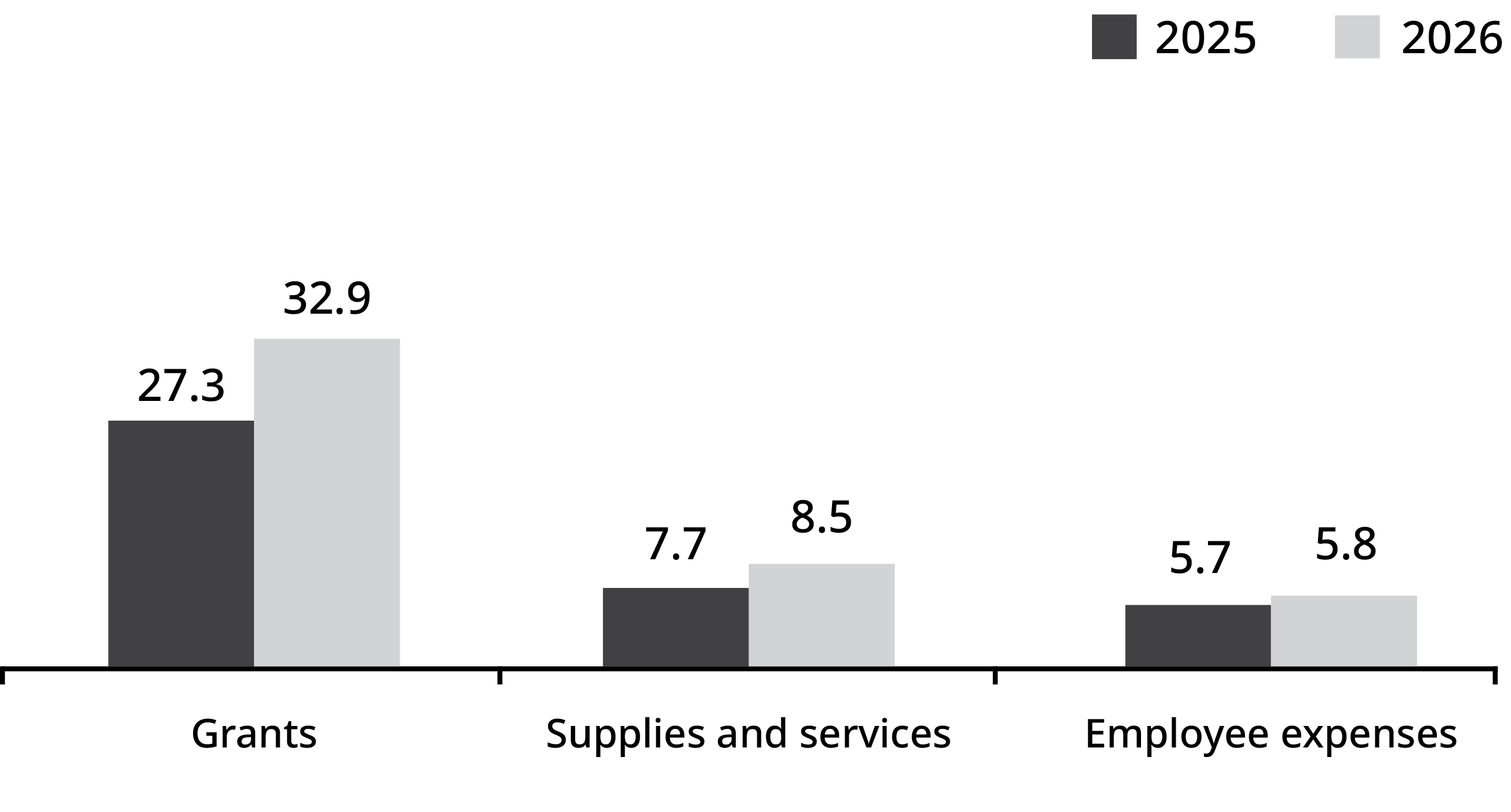
Expenses increased by $6.6 million to $47.3 million, mainly due to grants of $32.9 million supporting research and injury mitigation programs. The $5.7 million increase in grants reflected higher investment in targeted research and service delivery, with details in Appendix 5.
Income (millions)
Expenses (millions)
Motor Accident Insurance Commission financial statements
Nominal Defendant
Summary of financial performance 2025–26
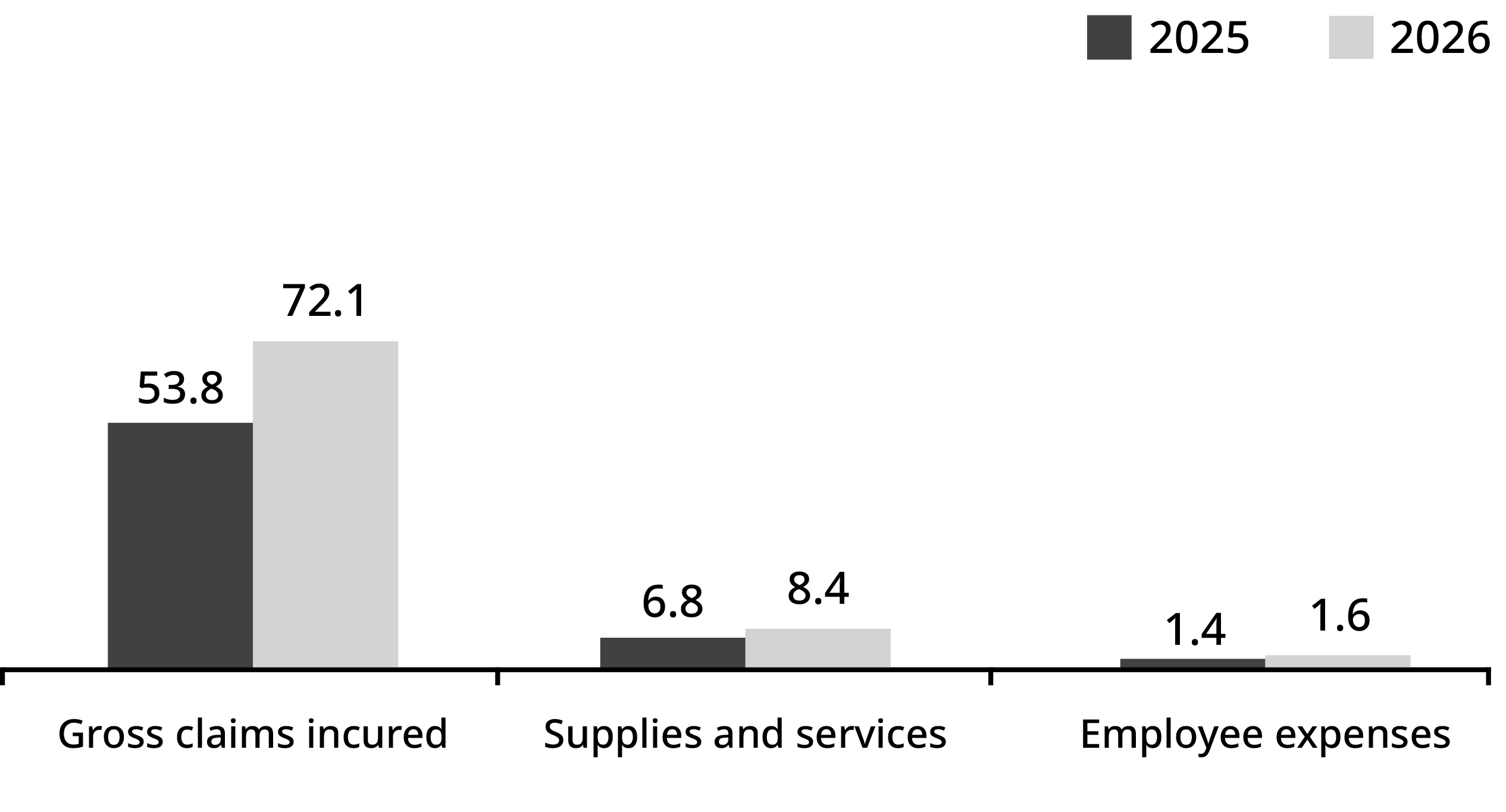
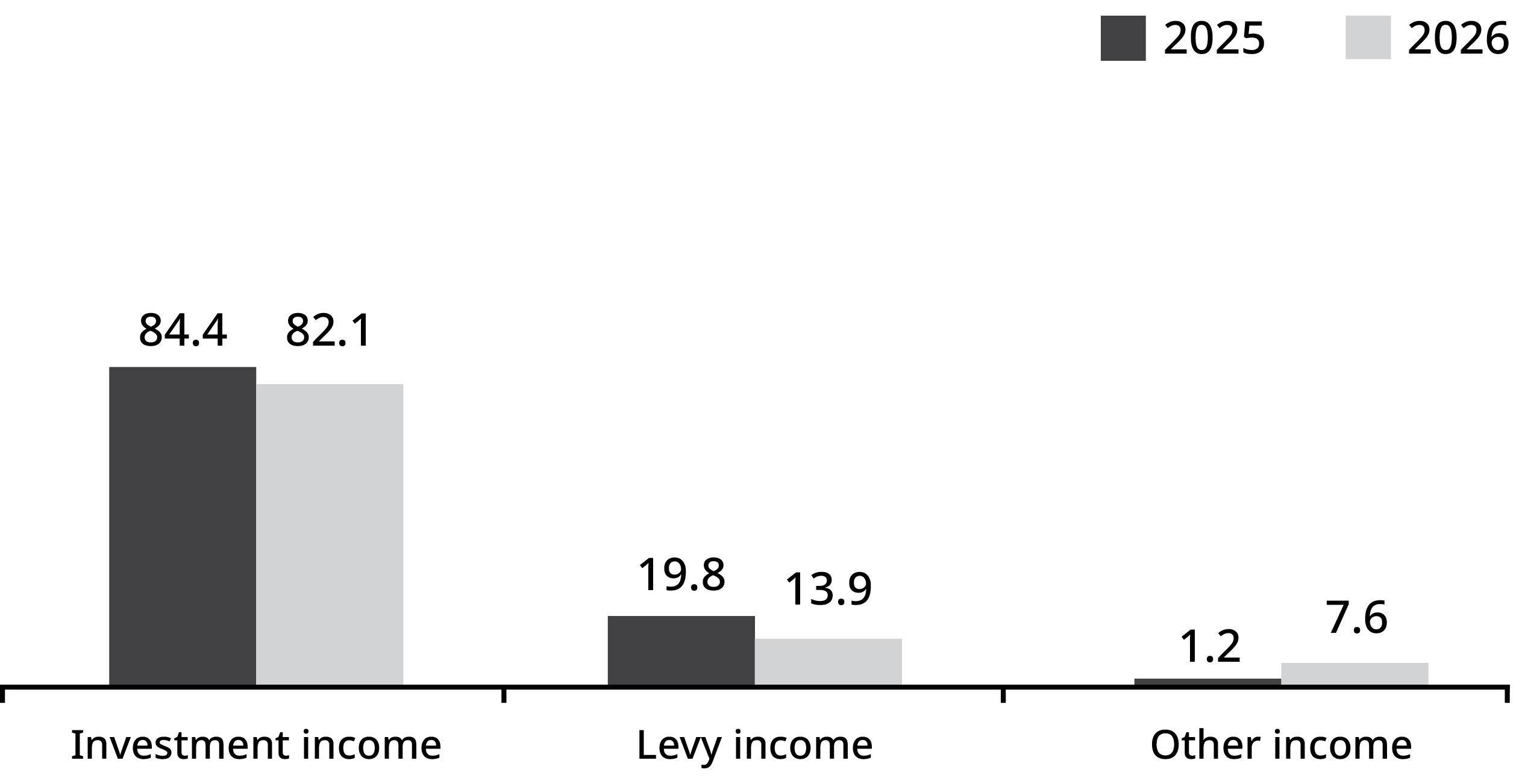
For 2025–26, the Nominal Defendant reported income of $103.6 million, expenses of $82.1 million and an operating surplus of $21.5 million, down from $43.4 million in 2024–25. The decrease mainly reflected higher net claims, lower levy income and reduced investment returns.
Gross claims rose to $72.1 million, mainly due to higher actuarially assessed claim provisions, partly offset by $7.6 million in recoveries.
The $2.00 Class 1 levy (2025 $4.00 Class 1 levy) generated $13.9 million, $5.9 million lower than the prior year. Investment gains were $82.1 million, down from $84.4 million, reflecting more modest equity market returns. The Nominal Defendant remains fully funded to meet outstanding claims liability.
Income (millions)
Expenses (millions)